
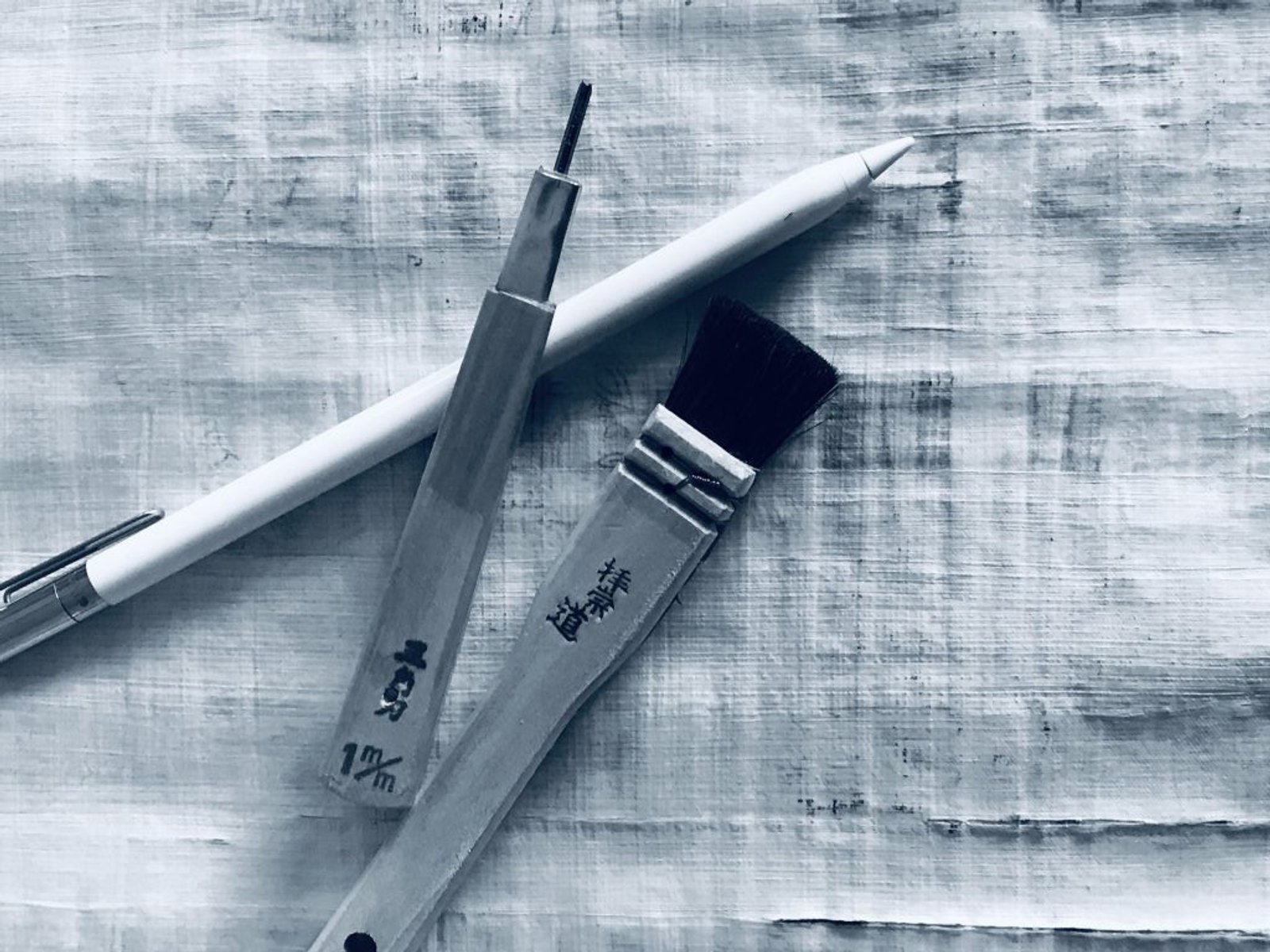
Commission workflow, start to finish
Every commission starts the same way: a brief that's half vague and half contradictory.
Every commission starts the same way: a brief that's half vague and half contradictory.
"I want something dark but warm. Detailed but not busy. My character — but more like how I see them in my head." That's a real brief, paraphrased. Most are some version of it. The job before the job is figuring out what the client actually means.
The intake
I use a short form for commissions — medium preference, reference images, intended use (print, digital, personal, commercial), and one open field: "describe the feeling, not the subject." That last one separates the clients worth working with. Someone who writes "I want it to feel like 3am in a city that doesn't exist" gives me more to work with than a full character sheet.
Once I have that, I do a single round of clarifying questions. One round. After that, I work from instinct. Commissions that go back and forth seven times before a single mark is made never end well.
Rough composition
I sketch in pencil on cartridge paper. No tablet, no Procreate, no undo button. The constraint is intentional — pencil forces commitment to shape and movement before I get precious about line quality. I photograph the sketch, drop it into Procreate, and adjust proportions if needed.
At this stage I'll often run a quick lighting study — this is where AI enters the process. Not to generate the image. I use it the way I'd use a reference photo: feed it the rough comp, ask for lighting variations, screenshot the one that feels right, and use it as a reference while I ink. Same as how I'd pull a folder of reference photos for a complex scene. Faster, more specific to what I'm building.
Inking
Back to paper. Micron and brush pen, sometimes a dip pen if the piece calls for variable line weight. I ink over a light-boxed version of the pencil sketch — nothing fancy, I've used a glass table with a lamp underneath for years.
The inking stage is where the piece either lives or dies. AI can't do this. Not because of technical limitation — it's that the soul of the image lives in the decisions made under pressure: where to simplify a line, where to let the ink bleed, where to leave white space that shouldn't logically exist but makes the composition breathe. Those are judgment calls that come from years of looking at work you loved and work you made that failed.
Scanning and finishing
300dpi scan, cleaned up in Photoshop, colored (if applicable) in Procreate. Textures occasionally pulled from AI-generated texture passes — again, reference, not replacement. Final export at the agreed dimensions.
Delivery
Single PDF with the final image, a 72dpi web version, and a short note on what I was going for. No explanation needed, but I find clients appreciate knowing what decisions were made and why.
Total time: 8–20 hours depending on complexity. I charge accordingly.